Dieciséis historias para la barra del diner, de los cinco pueblos de
la colina. Cada afirmación de abajo se remonta a una fuente
identificada en nuestro archivo de investigación — lo divertido
también se verifica.
Mesa de Ciencia · Geología
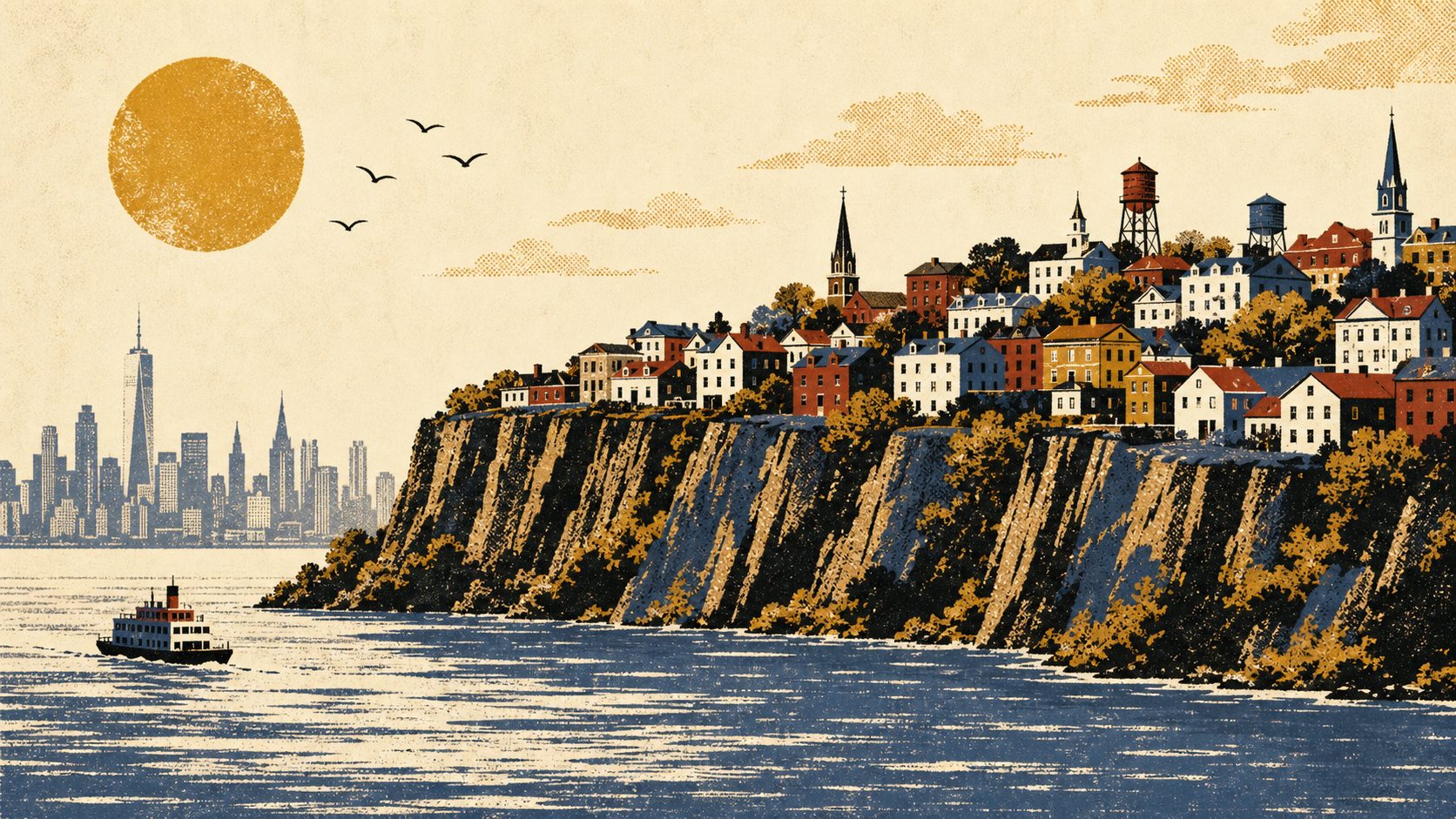
El muro tiene 200 millones de años
Los Palisades son un filón-capa de diabasa —
magma inyectado en los sedimentos de la cuenca de Newark hace
unos 200 millones de años, cuando Pangea se partió y el
Atlántico nacía. La roca de arriba se erosionó; el muro se
quedó.
El filón recorre unas 40 millas y alcanza hasta unos 1,000 pies
de espesor, enfriado en disyunción columnar —
las pulcras columnas hexagonales que se ven desde la autopista.
Los geólogos cruzan el país por esta vista. Nosotros cruzamos a
la mala por debajo.
Fuentes: referencias del Palisades Sill; American Museum of
Natural History
Mesa de Ciencia · Fósiles
El lagarto volador de Granton Quarry
En 1960, el adolescente de North Bergen
Alfred Siefker y sus compañeros de clase
hallaron el único esqueleto conocido de
Icarosaurus en Granton Quarry. El paleontólogo
Edwin Colbert nombró la especie por él en 1966.
El pequeño reptil triásico — unos 10 cm del cráneo a la cadera —
planeaba sobre costillas alargadas, como los lagartos Draco de
hoy. Cuadrilla de fósiles, a formarse: «Dinosaurs Rock!» llega al
Rec Center el martes.
Fuentes: referencias de Icarosaurus; archivos del AMNH
Mesa de Datos · Censo de 2020
Los campeones de densidad de América
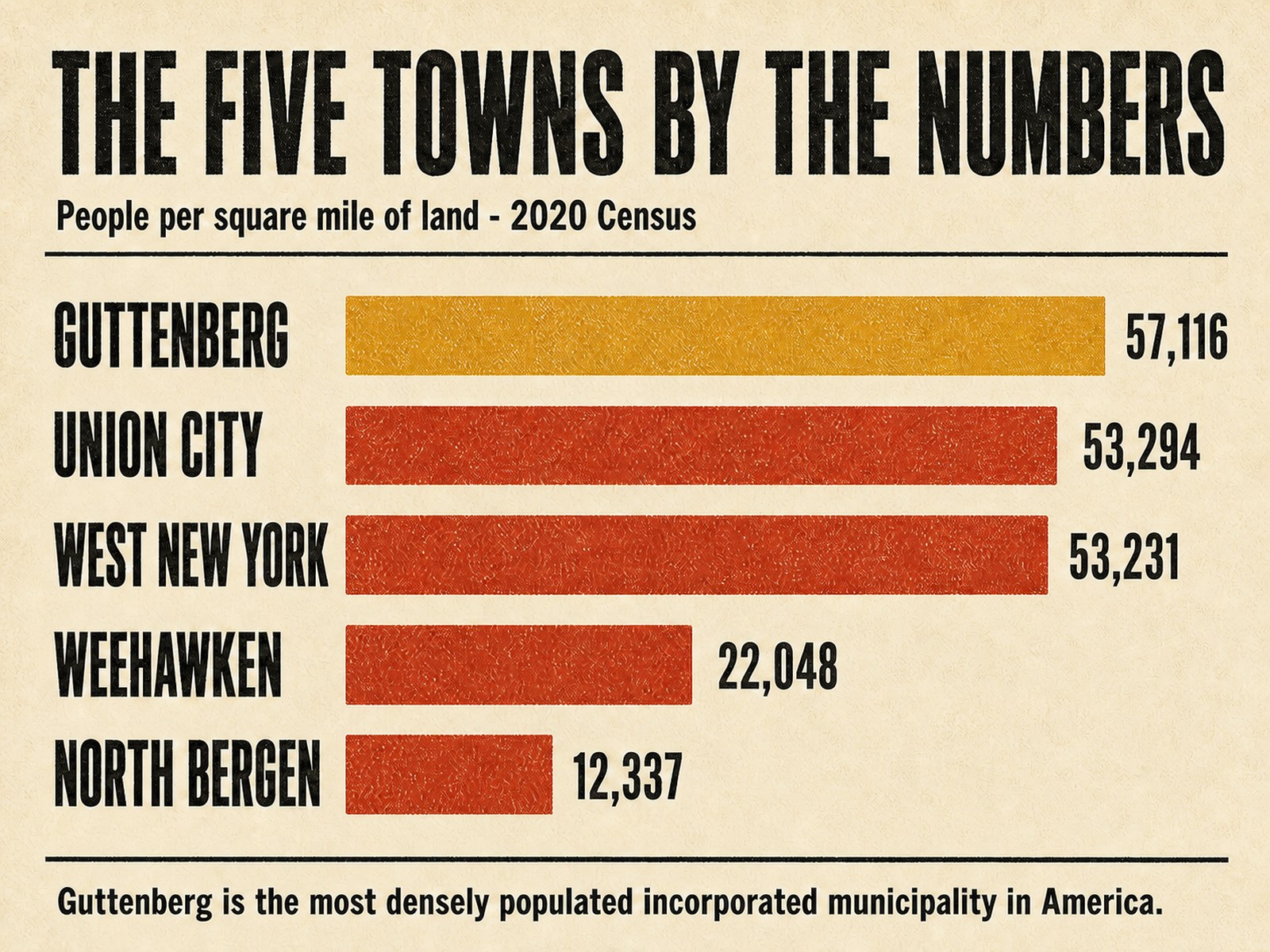
Guttenberg: 57,116 personas por milla cuadrada
de tierra — el municipio incorporado más densamente poblado de
Estados Unidos, en un pueblo de cuatro cuadras de ancho.
Union City (53,294) y West New York (53,231) le siguen de cerca,
lo que convierte a tres de los pueblos más apiñados de América en
una sola caminata continua por Bergenline. Los 12,337 de North
Bergen parecen casi holgados. Gráfico completo en El Pueblo.
Fuentes: U.S. Census Bureau; cifras citadas por el Censo
Mesa de Tecnología · Ingeniería
El túnel y el sacacorchos
El tubo central del Lincoln Tunnel abrió el
22 de diciembre de 1937 — 8,216 pies bajo el
Hudson, un peaje de 50¢ y 7,661 autos el primer día. El tubo
norte llegó en 1945, el sur en 1957.
Del lado de Weehawken, la carretera baja el acantilado en tres
cuartos de círculo — la Helix, antes «el
Sacacorchos». La espiral existe porque el acantilado no se
mueve.
Fuentes: historia de la Port Authority; referencias
enciclopédicas
Mesa de Tecnología · Radiodifusión
La aguja de 760 pies de Woodcliff
En 1949, una torre de WOR de 760 pies — 420
toneladas de acero en celosía — se alzó en la sección Woodcliff
de North Bergen, citada a menudo entre las diez estructuras
hechas por el hombre más altas del mundo en su época.
En noviembre de 1956, una avioneta chocó contra la torre; fue
demolida días después. Durante siete años, tuvimos más torre que
la mayoría de las ciudades.
Fuentes: referencias de la torre WOR TV; HudPost; NYT
Mesa de Tecnología · Tránsito
Una estación de tren 160 pies bajo tierra
La estación Bergenline Avenue está a unos 160
pies bajo los Palisades, dentro de un antiguo túnel del West
Shore Railroad — se llega al andén en ascensor desde el edificio
de acceso en la calle 49 en Union City.
El tren ligero que sirve conecta los malecones desde Bayonne
hasta la terminal de Tonnelle Avenue en North Bergen. La próxima
vez que el ascensor te parezca lento, cuenta la roca sobre tu
cabeza.
Fuentes: NJ Transit; referencias de la estación
Mesa de Tecnología · Arquitectura
Tres octágonos llamados Galaxy
Las Galaxy Towers de Guttenberg — tres torres
octogonales de 415 pies terminadas en 1976 — albergan más de
1,000 residencias. Para 2010, casi uno de cada cinco residentes
de Guttenberg vivía en ellas.
Convertido en condominios en 1980, el complejo es el horizonte
del pueblo más denso de América: una calle principal vertical
sobre el Hudson.
Fuentes: referencias de Galaxy Towers; Living on the Hudson
Mesa de Tecnología · Historia portuaria
8,000 racimos por hora
En 1952, United Fruit abrió en Weehawken una terminal que el New
York Times llamó la terminal mecánica de carga de banano más
nueva y más grande del mundo — con capacidad de
8,000 racimos por hora.
Trabajó el malecón por más de 50 años; el sitio es el Port
Imperial de hoy. Tu banano del desayuno puede tener antepasados
aquí.
Fuentes: archivo del NYT (1952); Weehawken Historical Commission
Mesa de Industria · Textiles
La capital del bordado de América
Antes de que fuera «Havana on the Hudson», el norte de Hudson
cosía. Las máquinas de encaje Schiffli hicieron
de Union City la «Capital del Bordado de Estados Unidos», con
West New York y North Bergen zumbando al lado.
Las máquinas se fueron; el apodo sobrevive en los marcadores
históricos. La avenida siempre ha hecho cosas — encaje, luego
cafecito.
Fuentes: referencias de Union City y West New York; Hoboken Girl;
marcador HMDB
Mesa de Historia · 1780
La Gran Persecución de Vacas de 1780
El 20 y 21 de julio de 1780, «Mad Anthony» Wayne atacó un fortín
lealista sobre Bulls Ferry y se llevó el ganado destinado al
Nueva York en manos británicas. El fortín resistió — las vacas
fueron la victoria.
El espía británico Mayor John André conmemoró la incursión con
una balada satírica, «The Cow Chace» («La persecución de
las vacas»). Sí, en serio. Un poema. Sobre vacas.
Fuentes: referencias de la Batalla de Bull's Ferry; All Things
Liberty
Mesa de Historia · 1885–1893
El hipódromo que nombró un barrio
El Nungesser's Guttenberg Racetrack corrió
carreras de invierno de 1885 a 1893, atrayendo multitudes y
corredores de apuestas a la línea del condado — hasta que Nueva
Jersey prohibió el juego en 1893 y la tribuna enmudeció.
La pista ya no está, pero la sección Racetrack de North Bergen
aún lleva el nombre. Algunas direcciones tienen más memoria que
los gobiernos.
Fuentes: referencias de Nungessers; historia hípica archivada
Mesa de Historia · 1872
Campos de tiro y pistas de baile
Schuetzen Park abrió en 1872 sobre la cresta —
tiradores alemanes disparando contra la ladera del acantilado
(práctica de tiro hasta 1935), con terrenos de festival que
anunciaban espacio para 50,000.
Gran parte del parque se vendió después para el acceso de la Ruta
495/Lincoln Tunnel; la tradición del Volksfest sobrevive. Antes
de la Helix, esta cresta ya sabía cómo dar una fiesta.
Fuente: referencias de Schuetzen Park
Mesa de Historia · Desde 1915
Un siglo del Passion Play
La tradición del Passion Play de Union City
comenzó en 1915 y corrió por más de un siglo — la más longeva del
país, montada por décadas en el Park Theatre construido a
propósito (1931–32).
El teatro sigue vivo como Park Performing Arts Center. Una
temporada escénica más vieja que la mayoría de los espectáculos
de Broadway es algo muy de Union City.
Fuentes: Arquidiócesis de Newark; Preservation NJ
Mesa de Cultura · Migración
La Habana en el Hudson
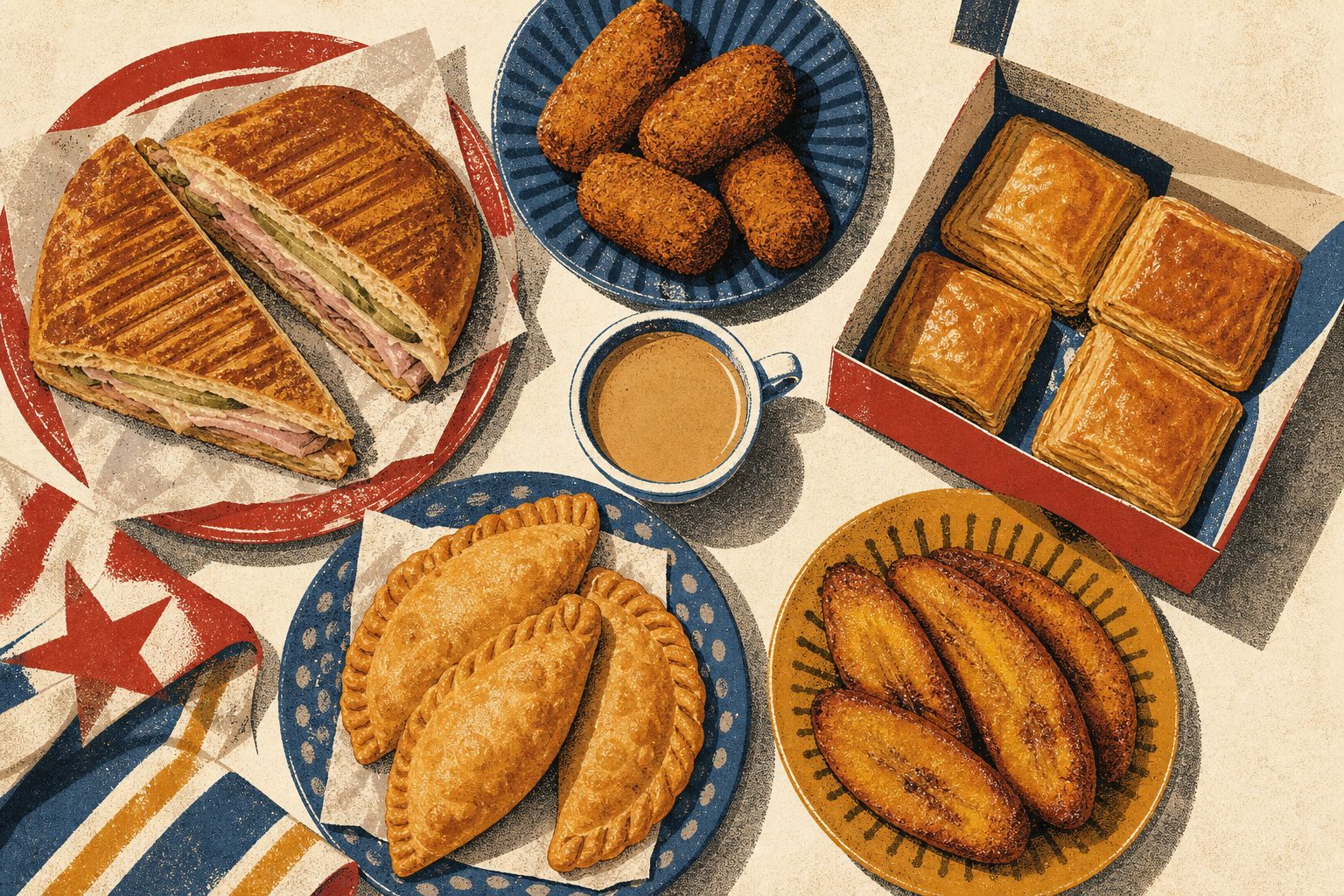
Una pequeña comunidad cubana ya estaba aquí en los años 40;
después de 1959, el éxodo hizo de Union City y West New York la
segunda capital de la América cubana — los Vuelos de la Libertad
por los 60 y los 70, luego Mariel en 1980.
En 2004, la Reina de la Salsa recibió su estrella:
Celia Cruz Park, 31st y Bergenline. Segunda solo
después de Miami — y el cafecito está más cerca.
Fuentes: referencias de Havana on the Hudson; america.gov; The
Clio
Mesa de Gente · Verificado
Los hijos famosos de los cinco pueblos
North Bergen crió a James L. Brooks (The
Simpsons), Joey Diaz (NBHS '82) y
070 Shake — nombrada por el código postal. Union
City nos dio a Otto Messmer, cocreador de Felix
the Cat, y a la campeona de WWE AJ Lee.
Los primeros años de Guttenberg incluyeron a
Melissa Fumero; Weehawken educó a los jóvenes
Fred y Adele Astaire en Eldorado Place; West New
York contó al supermodelo Tyson Beckford como
residente. ¿Y Rosemarie DeWitt? Nieta de Braddock. La colina
guarda los recibos.
Fuentes: Vulture; NJ.com; Britannica; Weehawken Historical
Commission; USA Today
Mesa de Pantalla · Filmado aquí
Filmado justo aquí
Durante una década, la sala de escuadrón y el tribunal de
Law & Order: SVU fueron un
estudio de 53,000 pies cuadrados dentro del
viejo edificio NBC Central Archives en North Bergen — hasta que
se suspendió el crédito fiscal al cine y la producción se fue en
2010.
Y The Greatest Beer Run Ever (2022) vistió el Brass Rail
en 76th y Bergenline como un bar neoyorquino de 1967. Si parece
Manhattan pero los letreros de estacionamiento dicen Hudson,
créele a los letreros.
Fuentes: referencias de producción de SVU; Deadline; NJ Film